 YunLab.ai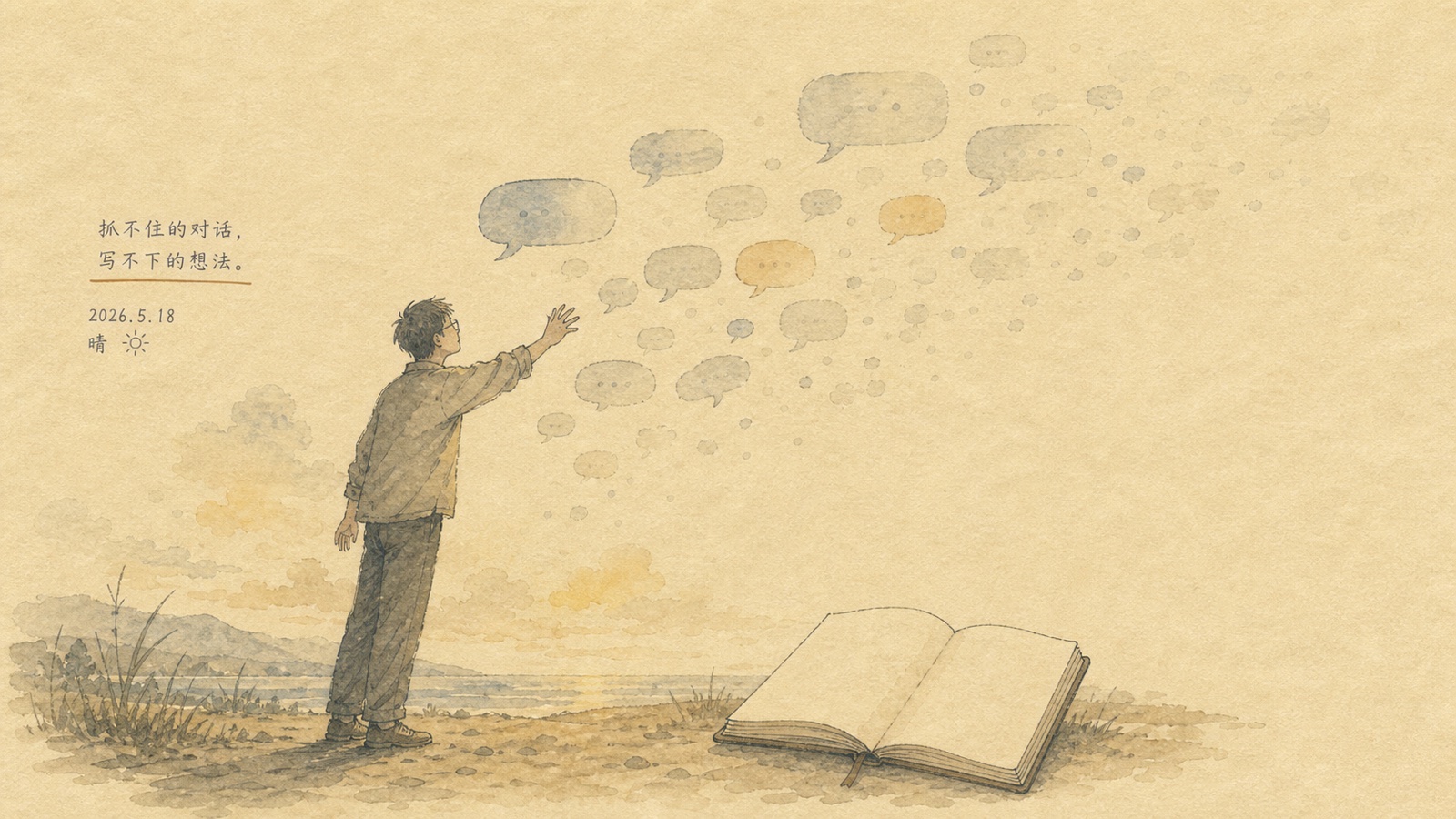
Personal knowledge base pothole notes
I thought it was simpler than it is.
When I first wanted to organize my own chat logs, I had a very direct idea: I've discussed so many things with AI, friends and colleagues — surely all of that is already a mine.
So shouldn't I just export it, chunk it, embed it, push it into a vector store, and then any time later I can ask "how did I decide on this before?"
The idea is seductive. It looks low-effort and it fits the popular picture of a "knowledge base": shovel material in, AI fetches it back for you.
The pothole I actually hit was this: being able to retrieve isn't the same as being able to use it correctly.
01 / First pothole
It really does retrieve — but I can't trust it directly
What actually put me on alert wasn't the system failing to find things. It was the system finding too many things that "looked relevant."
A passage might have been a temporary thought at the time, an angle I was testing, a judgment that got overturned later, or just a transition line to keep the conversation moving.
A person on the day can read it correctly because I remember the scene the conversation happened in. I know what was asked before and why I changed my mind after. But when an AI later only gets a few of those sentences, it's easy for it to treat "once said" as "still true."
That's when it hit me: raw chat logs aren't written like knowledge. They're written for moving the moment forward.
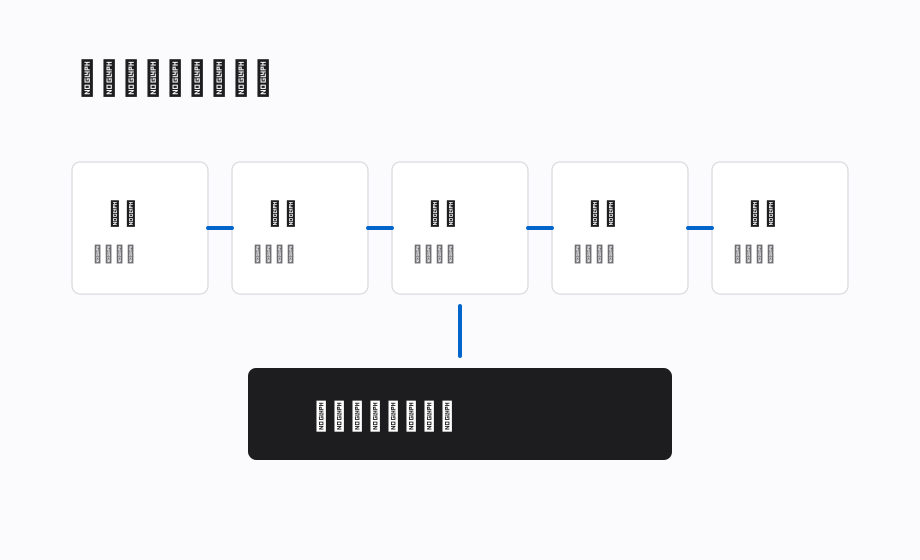
What gets retrieved is fragments
It can find a sentence, but not always know why that sentence was said in the first place.
Drafts look like conclusions
A lot of discussion is just probing a direction; in retrieval it later reads like a final judgment.
Old decisions come back to life
Plans that were already overturned, if their status isn't marked, still get pulled back out.
Noise gets amplified
Small talk, detours, mood, and repeated confirmations all hurt downstream recall quality.
Boundaries get mixed up
Private relationships, project judgments, public material and methodology can't share one retrieval surface.
Nothing can be handed off
Given only a snippet of chat, another AI can't tell whether to treat it as evidence or background.
02 / Second pothole
A vector store solves recall, not judgment
Once I broke the problem apart, I realized I'd conflated two things at the start.
A vector store helps me pull similar content back — that's a recall problem. But what a knowledge base really has to solve is a judgment problem: can this content be trusted, where does it apply, has it expired, can it guide the next action.
Without those annotations, more chat actually makes the system more "seemingly knowledgeable." It can quote a lot of old lines without knowing which old lines shouldn't be used anymore.
So I don't treat "retrievable" as "knowledge base done." Retrievable is step one. After that, what was retrieved still has to be curated into knowledge that can carry responsibility.
03 / What I do now
Distill into a knowledge card first
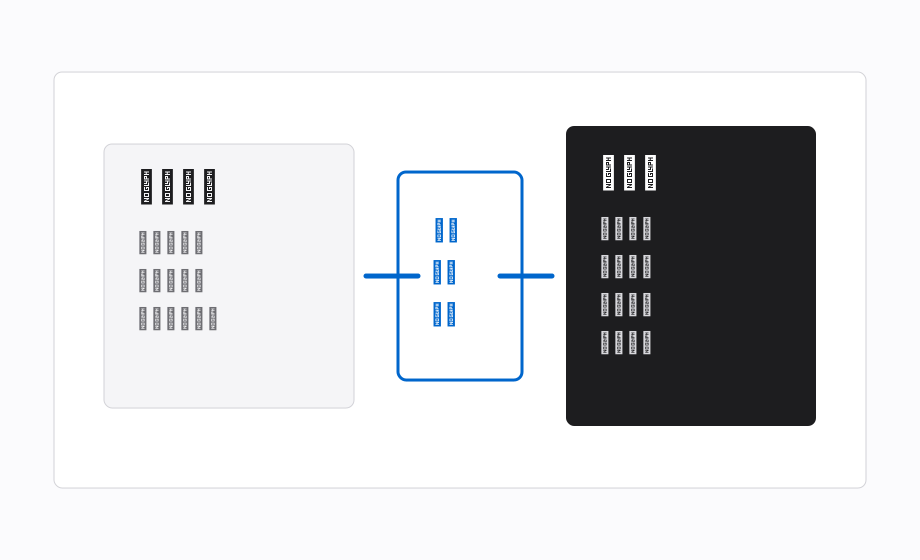
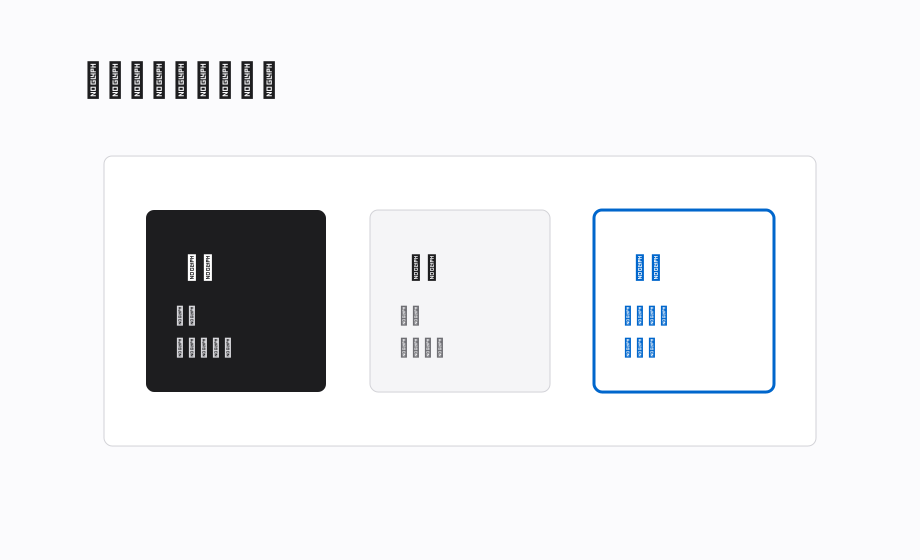
These days I prefer to first pull out the actually-effective judgments from the chat, and then write them up as a knowledge card.
One card has to make at least these things clear: what the conclusion is, where it comes from, where it applies, how confident I am, and when it needs to be rechecked.
04 / Sort boundaries first
Not every memory belongs in one place
Raw chat contains personal relationships, commercial context, unfinished judgments, and sensitive detail.
That stuff can't share a surface with public article material, project experience and general methodology. A knowledge base without boundaries is more dangerous the smarter it gets.
05 / The takeaway after the potholes
Chat logs are a mine, not a toolbox
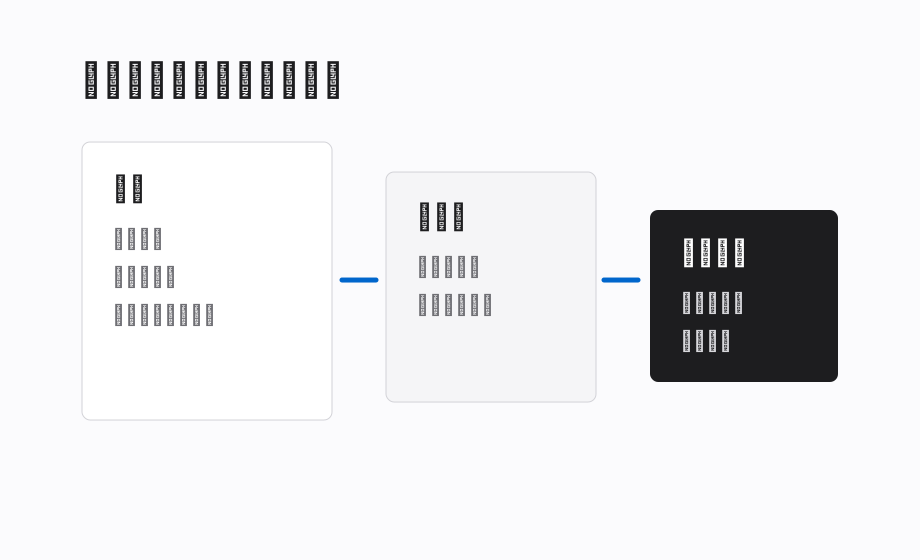
So now I treat raw chat logs as a material pool, not a knowledge base.
They still matter. They hold where ideas came from, the hesitations of the moment, and a lot of detail that I'd otherwise forget. But without curation it's hard to turn any of that directly into the basis for next action.
What's actually worth keeping is the judgment left after the chat: a verified conclusion, a process that can be reused, a pothole already hit, a clear preference, a task context that can be handed off to the next AI.
The curation layer in the middle can't be skipped. Drop the noise, keep the sources, mark the status, write down the applicable scope, turn conclusions into assets ready for use.