 YunLab.ai
OpenClaw multi-agent notes
Multi-agent isn't about adding a few more personas.
When you first start building a personal AI system, it's very easy to get pulled in by the "role" thing.
You give them names, write a backstory, write a tone, write what they're good at. That does help — without a stable temperament, an agent quickly degrades back into a temporary prompt.
But the more I do this, the more I think the actually hard part of multi-agent isn't writing each role to feel human. It's getting those roles to collaborate like a small company.
01 / The virtual company metaphor
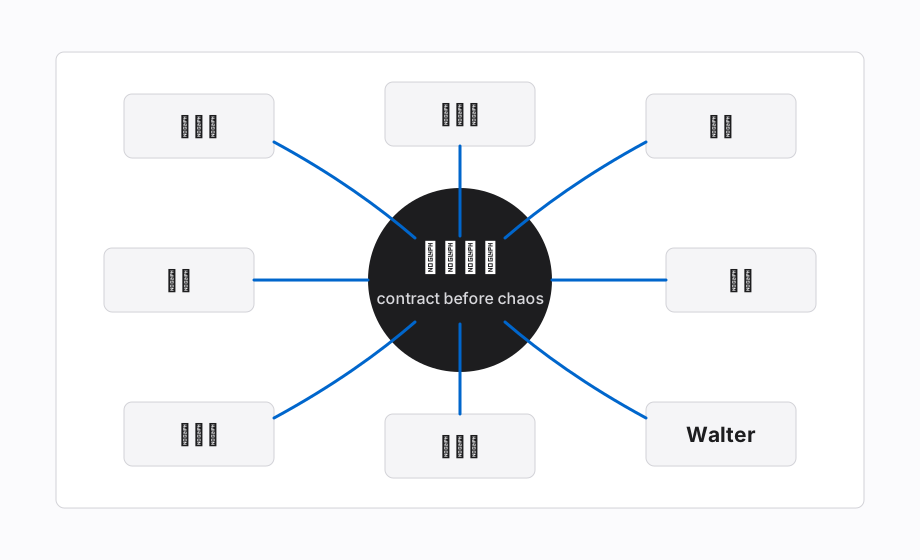
I'm not building a chat group, I'm building a company
Put 8 agents together with nothing else and you get something more like a chat group. Everyone can say a few things, but who's responsible for what, who renders the final judgment, who leaves a deliverable, who picks up the next leg — none of it is clear.
What makes it actually feel like a company is that every role has a responsibility boundary.
Someone closes out the task, someone judges the content, someone researches and counter-checks, someone handles visual expression, someone does technical verification, someone audits and governs. The role name is just the entry point. The work contract is the skeleton.
Zhao Zilong
The main controller and write-authority — lands direction, tasks, and acceptance into files.
Ji Yanran
The hub and coordinator — receives tasks, breaks them into actions, holds context.
Suwan
Content and aesthetic judgment — decides what's worth writing and what shouldn't ship.
Huo Rui
Research and counter-evidence — finds evidence first, judges second, keeps risks on the record.
Linlu
Visual and pacing — turns content into image, sound, and timeline.
Shen Zhixing
Tech and verification — makes tools run, and can explain why they run.
Zhou Zhengqing
Audit and governance — checks standards, evidence chain, and handoff quality.
Walter
An outside observer seat — when there's no stable contract, mark as paused rather than fake it.
02 / The role is only the first layer
The real thing is the work contract
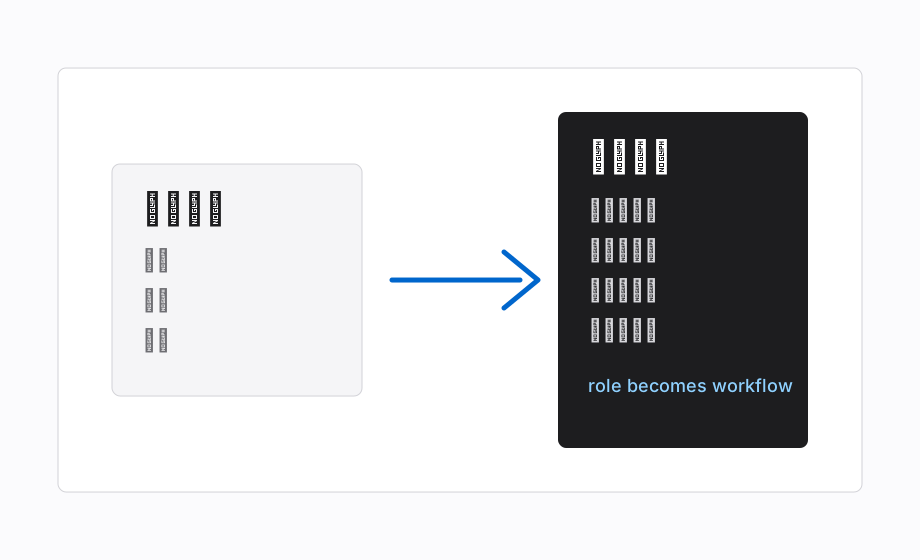
When I write an agent now, I don't just write "who you are." I push on four harder questions.
One, what inputs does it receive. Two, what is it allowed to do and not allowed to do. Three, what outputs must it leave behind. Four, in what situations must it stop and hand off to a human or another agent.
Once these are written clearly, the role stops being just a temperament — it becomes a node that can enter a workflow.
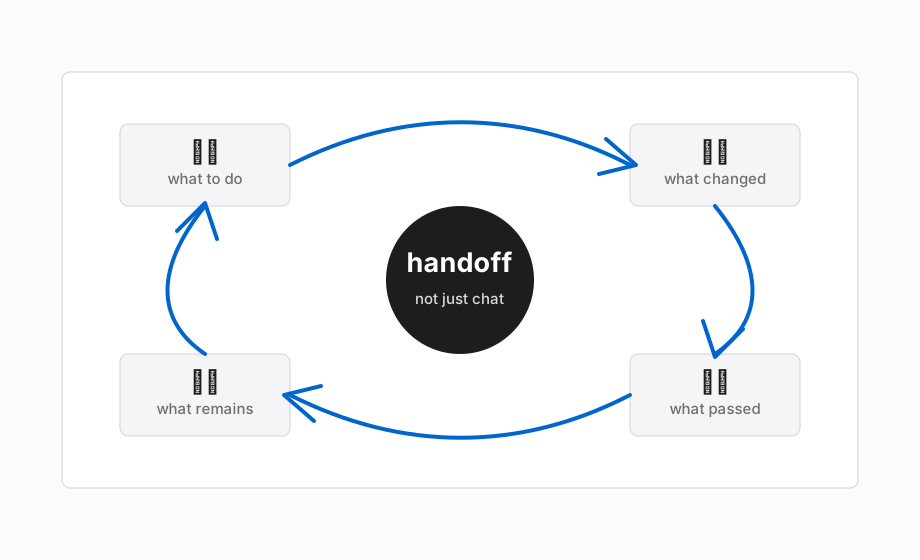
03 / Handoff
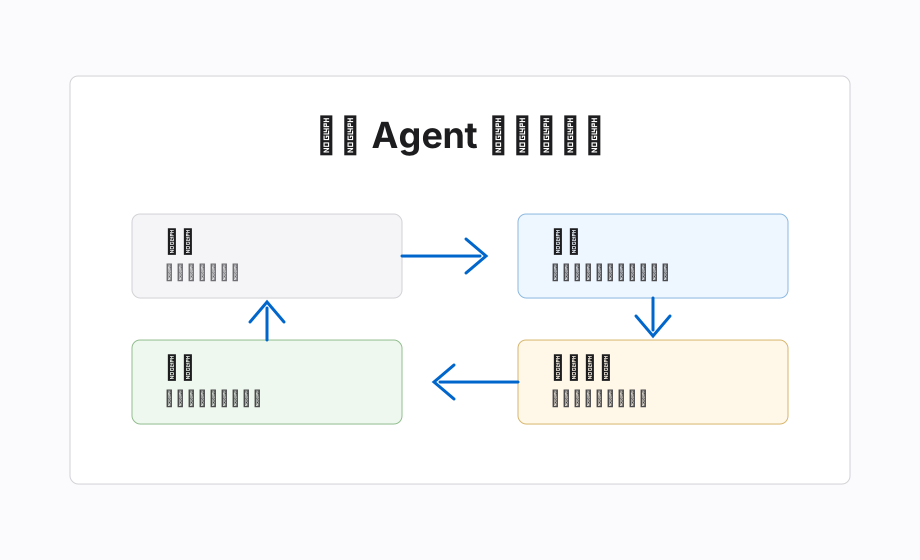
No handoff, no team
Whether one agent can pick up after another decides whether they're actually a team.
So the output can't be just a paragraph of reply. It needs files, state, evidence, and a next step.
04 / Operating order
Companies run on systems, not enthusiasm
The thing a multi-agent system most fears is starting from scratch every time. Who did what today, why they did it, where the result lives — all of it has to be findable next time.
05 / Where I land now
The role should be likeable, but more importantly deliverable
I like writing personality into agents, because personality helps them form stable judgments. But if it stops at personality, it's still just "a role that talks."
For me, an agent becomes real when it can enter a long-running work system: it knows its position, it knows its boundary, it knows what evidence to leave, and it knows when to stop pretending to understand.