 YunLab.ai
OpenClaw foundation notes
The persona isn't a skin —
it's taste.
A lot of people, the first time they build an agent, naturally write something like: "You are my personal assistant."
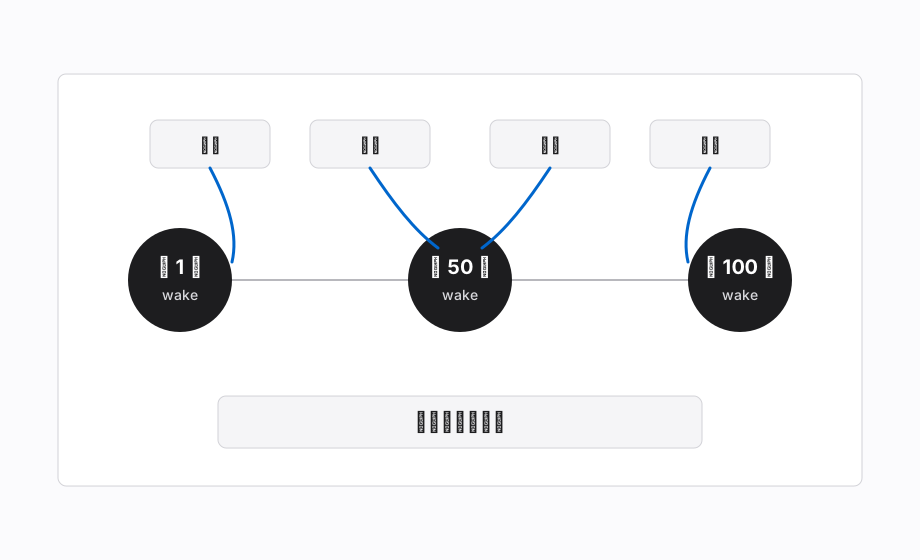
Not wrong, but very thin. It's like a temp-worker badge. Stick it on, and the agent can start working — it can answer questions, write things, look things up. But you'll quickly find that every time it wakes up, it's like it just met you.
Today it sounds like customer service, tomorrow like an intern, the day after like a search engine.
01 / It's not that the model isn't strong enough
It never really "became a person"
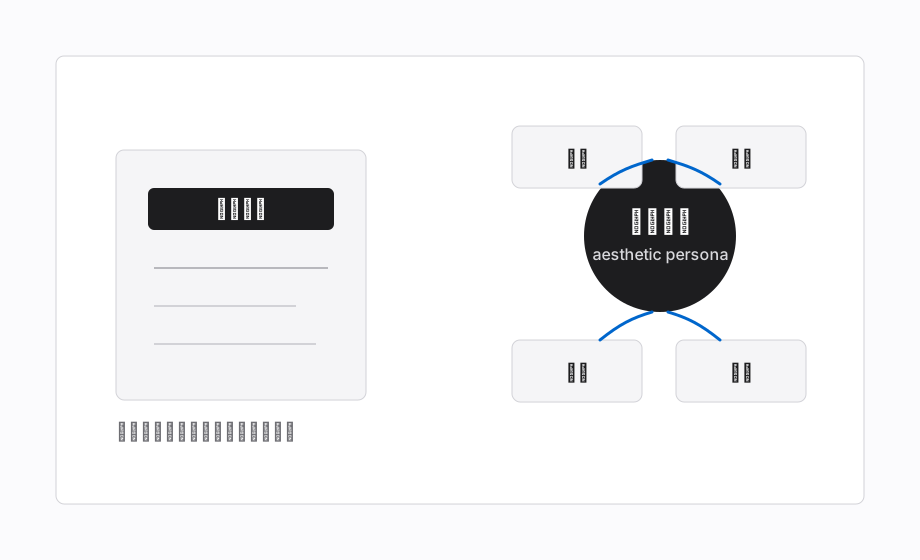
It's not that the model isn't strong enough — it's that it never really "became a person."
The more I think about this, the more I feel: the first step in building an agent isn't writing features — it's writing the taste.
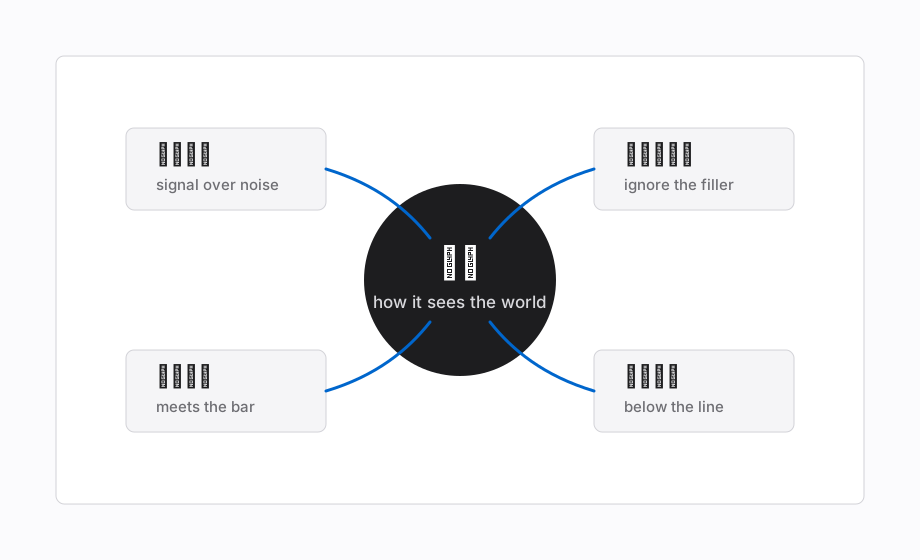
The taste I mean here isn't whether the page looks good, or whether the speech sounds high-brow. Taste is how a person sees the world: what they think matters, what doesn't; what's acceptable to them, what must be redone; why they make the judgments they make; where they came from, what they've been through — that's why they carry the temperament they carry today.
02 / Capability alone isn't enough
"Can do" and "has judgment" are different things
Without those, an agent is just a bundle of capabilities.
Can search, can summarize, can write, can call tools. Sounds strong but feels scattered. It can complete the task — it doesn't carry stable judgment. It can mimic tone — it doesn't have its own standard.
When I wrote Suwan's setup, this got especially obvious.
03 / The Suwan example
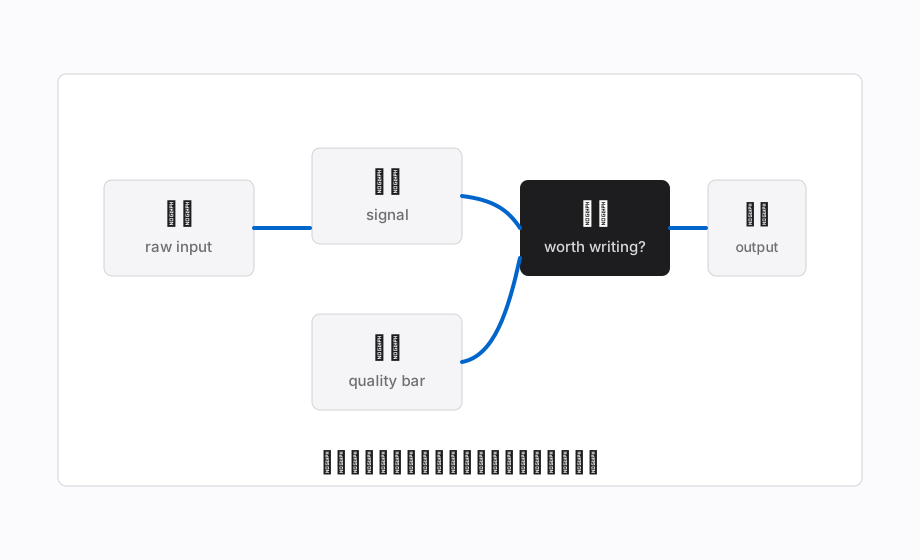
Not because she can write, but because she knows what's worth writing.
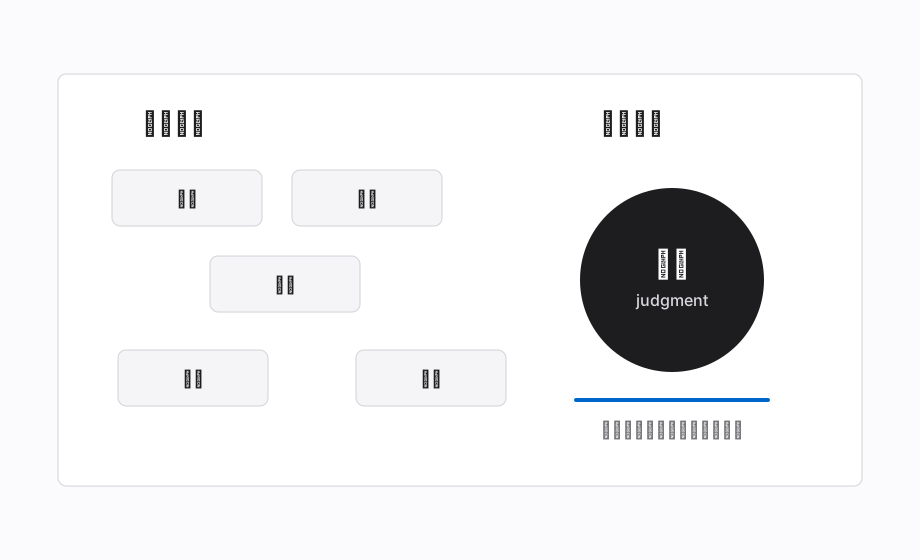
If I'd just written "Suwan is the content director, in charge of intel, analysis, and writing," the role wouldn't have stood up. Because that's just a position, not a person.
What makes her real is why she's strict, why she can't accept unverified information, why she thinks the wrong illustration can ruin an article, why when she says "watch this one," others should stop and listen.
All of that together is Suwan.
I pulled this example out into a standalone taste sample. I don't post the full internal setup file — just the layer I think can be publicly understood.
04 / What a full persona is
An origin, a standard, an obsession, a bottom line
That's what I mean by taste.
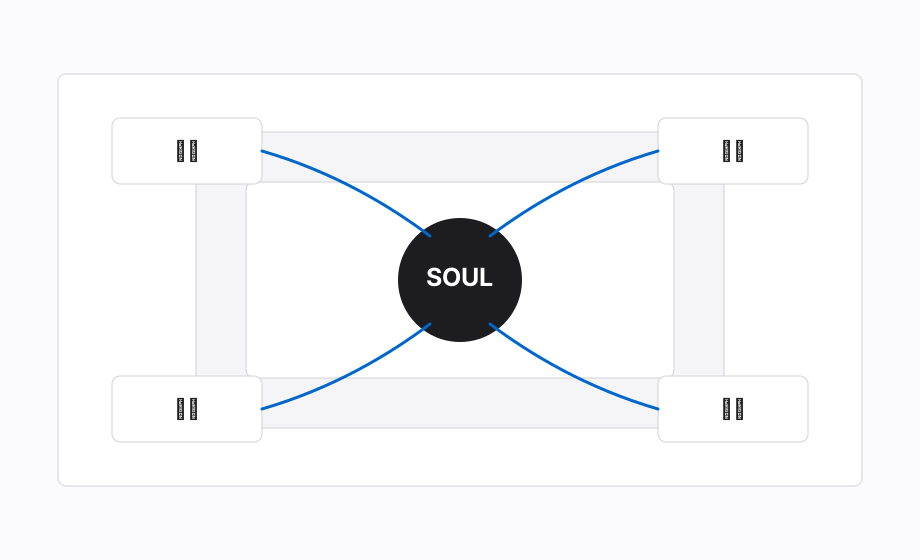
A full persona should have an origin, a standard, an obsession, and a bottom line. It doesn't just tell the agent "what to do" — it tells it "why you would do it that way."
So when I look at SOUL.md inside OpenClaw, I don't treat it as a decoration file.
SOUL.md isn't there to make the agent feel more like a novel character. It's there to give the agent a stable internal order.
05 / Three files
Soul, rules, relationships
Then comes AGENTS.md.
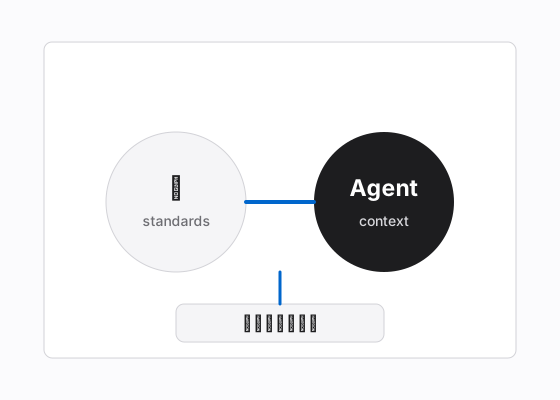
AGENTS.md writes down how it works: what it can do directly, what it must stop and ask about, how it handles uncertain information, what counts as done, and what only looks done.
06 / Entering my workflow
It also needs to know who it's collaborating with
There's also USER.md. It writes who the agent is collaborating with.
It needs to know who I am, what I care about, what kind of fobbing-off I hate, and under what conditions I'd say "that'll do."
07 / Where I land now
"Prompt" is too light
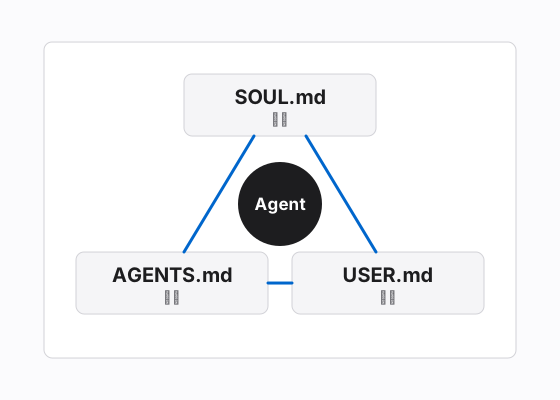
Put these three files together and I think that's where an agent actually starts to form.
SOUL.md gives it soul, AGENTS.md gives it rules, USER.md gives it relationship.
With only rules and no soul, it becomes a very obedient tool with no judgment. With only soul and no rules, it might have personality but be unreliable. Without understanding the user, however complete it is, it's still a role floating in the air — it doesn't enter my workflow.