 YunLab.ai
 CHAPTER 01 · 1.1
What This Chapter Is Meant to Solve
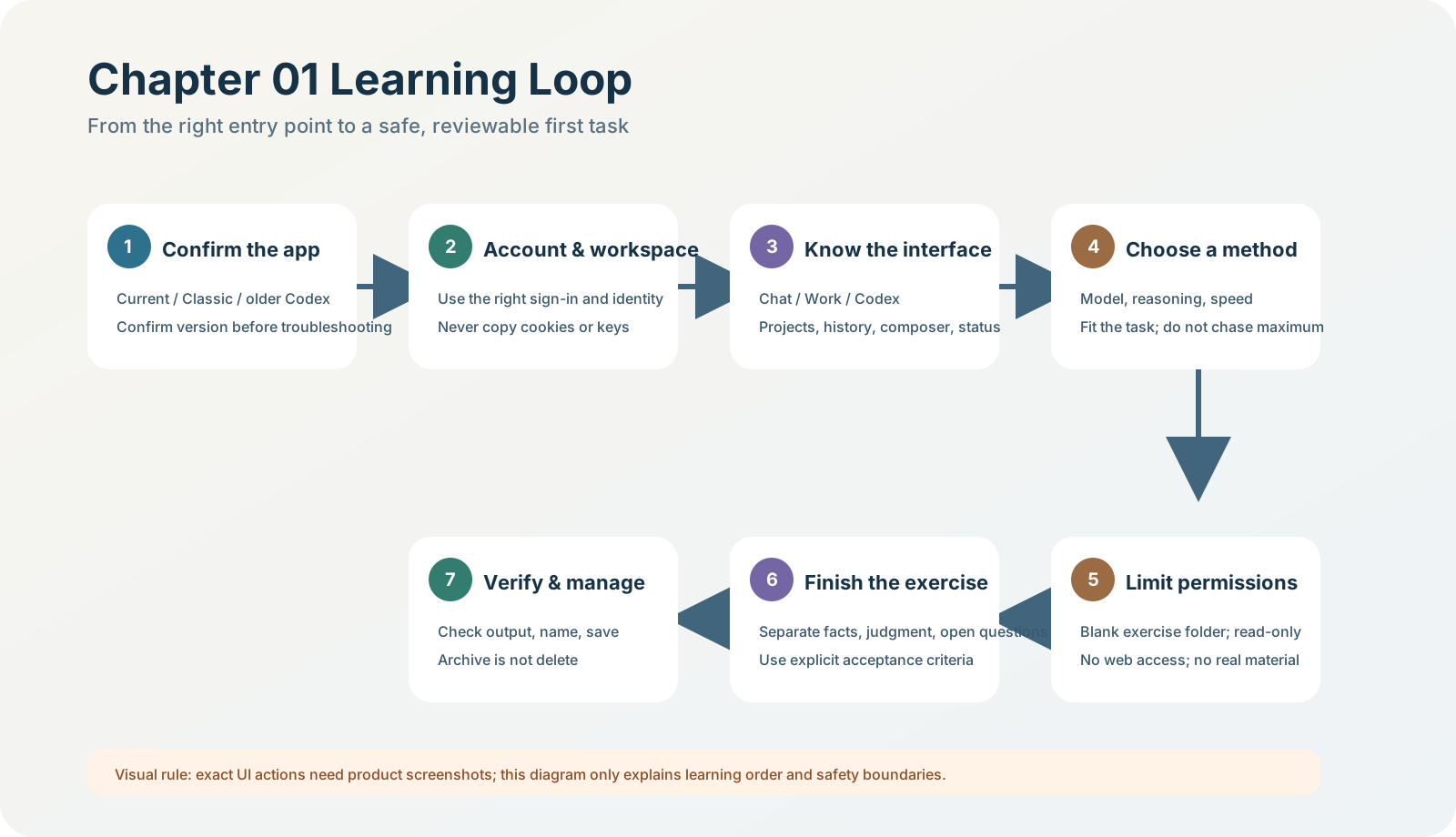
Figure 1-1 · DIA-01-01-01. Chapter 01 learning loop (teaching diagram, not a live-product screenshot).
The question this part answers: I can open the app. Why can I not hand it a real task right away?
Why learn to confirm before learning to operate
The desktop interface, visible models, and available permissions are not determined only by whether installation succeeded. They can also depend on the version, the signed-in account, plan, region, organization workspace, and administrator policy. Without confirming those conditions first, it is easy to mistake “I cannot see it” for “the product is broken,” or “someone else can use it” for “I am already authorized too.”
This chapter breaks first use into six links: product → installation → identity → interface → boundary → read-only task. Each link leaves a small piece of evidence, so the next one has a reliable starting point.
What you will look for
You do not need to memorize icon coordinates. You only need to find four kinds of information: the app name and version, the current account/workspace, the current entry level (ChatGPT or Codex; if ChatGPT, then Chat or Work), and the task composer. If one is temporarily unavailable, record “not currently visible” rather than immediately changing settings or reinstalling.
Follow along: make a learning record
On paper or in a new local note, write four lines. Do not take a screenshot of the account page:
Client and version: ______;Current space: personal / organization workspace / unsure;Currently visible entry: ______;Chapter exercise task title: Chapter 01 | Read-only Exercise | North Shore Reading Club.
Expected result: these four lines let you later separate “wrong sign-in,” “outdated version,” “feature not visible,” and “task not found” instead of saying only “Codex does not work well.”
How the running case enters this chapter
The goal of the North Shore Reading Club exercise is not to write a formal notice. It is to sort three kinds of content from two fictional files: confirmed facts, judgments, and questions still to be confirmed. This is the acceptance line for every later operation: even if the model writes fluently, the task fails if it writes “it has been decided to extend to 60 minutes” when that was only a suggestion.
Minimum exercise and acceptance
Write down which piece of information you currently lack: product, version, account/workspace, entry point, permission boundary, or exercise material.
Pass condition: you can explain that “opening the app” completes only a small part of environmental confirmation. Common mistake: upload real material first, then try to retract it after discovering the entry point or account is wrong. Next part: first state clearly which product you are using.