 YunLab.ai
 CHAPTER 01 · 1.11
Usage, Limits, Plans, and Cost Awareness
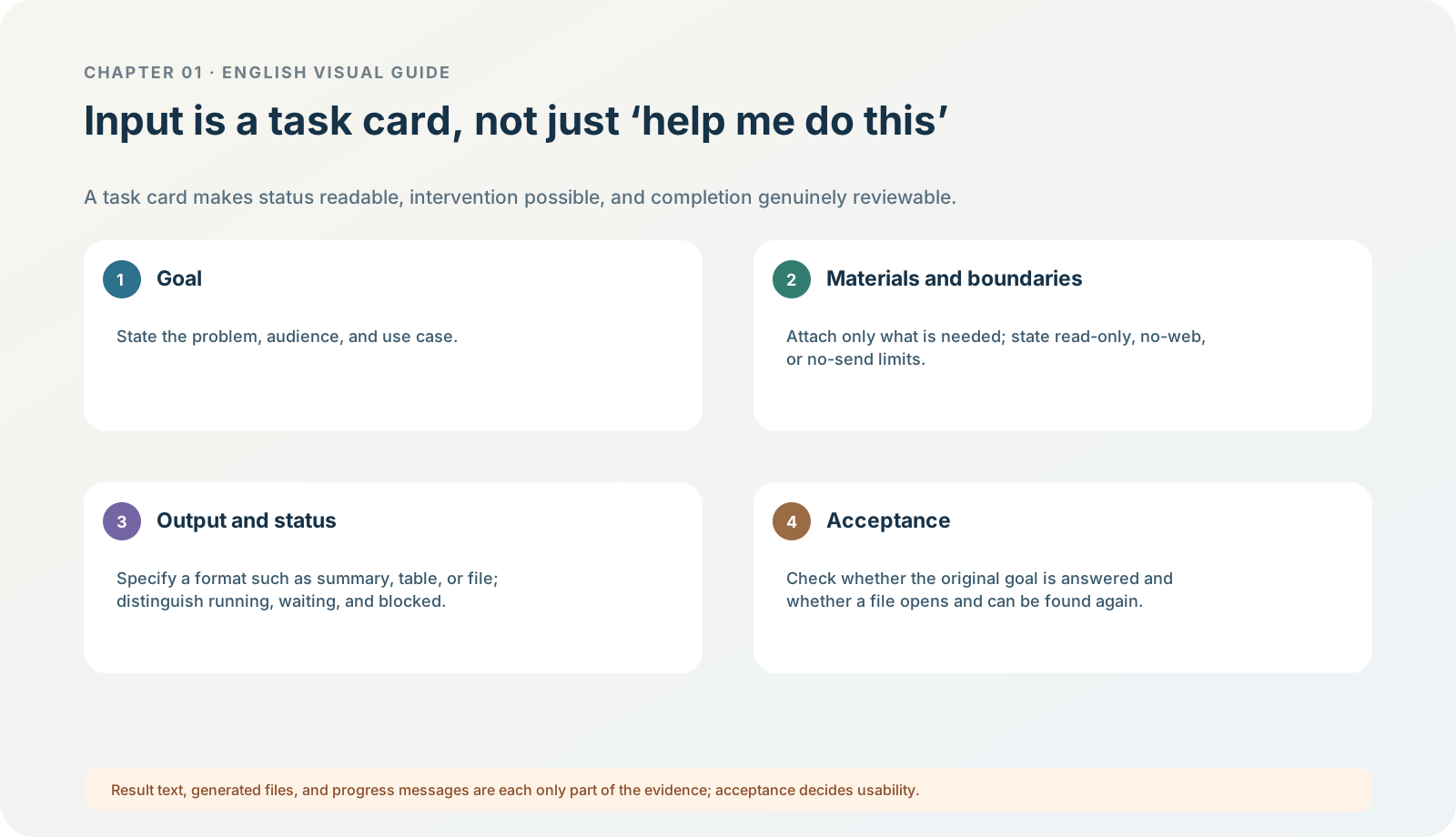
Figure 1-11 · DIA-01-V2-06. The relationship among task, state, and acceptance (teaching diagram, not a live-product screenshot).
This section answers: Why can the same account encounter different limits? Are a ChatGPT subscription, Codex usage, and API billing the same thing?
First, separate the three ledgers
| Ledger | What you are looking at | What it must not be confused with |
|---|---|---|
| ChatGPT plan | The experience and conditions available to you in the ChatGPT product. | Usage-based API billing. |
| Codex / Work task usage | Shared agent usage caused by task size, model, and where it runs. | The total of all limits for ordinary chat, uploads, voice, and so on. |
| API platform billing | The projects, keys, pricing, and spend for developer API calls. | A free allowance after signing in to the desktop app. |
Current official information: ChatGPT Work and Codex share the same pricing, credits, and usage limits; a task’s consumption varies with the size and complexity of the work, model, reasoning effort, and run location. Ordinary Chat, Voice, uploads, images, and other features may have separate limits. Treat the values, plans, and purchase options shown by your current account as authoritative. Pricing
The direct beginner answer: you do not need to pay to complete Chapter 01
No. Installation, sign-up / sign-in confirmation, learning the interface, writing a task card, and this chapter’s text-only / fictional-material exercises do not require you to upgrade a plan, buy credits, or configure an API key merely to “follow the book.” Start with the entry points your current account can actually see: if Codex is available, do the restricted-folder exercise; if Codex or Work is not visible, use this chapter’s text-only alternative and write “this run did not verify the local-folder boundary” in your learning record.
This does not mean every feature is free for every account. Work, Codex, local files, Voice, models, and limits can depend on plan, workspace, region, and gradual rollout; it only means that not seeing something does not mean you must buy it immediately. Compare an upgrade, credits, or the API only when you later have a clear, reviewable real need. Chapter 01 does not use a purchase as proof of learning progress.
What you may see
The interface may show a remaining percentage, reset time, a limit banner, or options to upgrade or buy credits; it may also show them only after a limit is reached. They are all current state: you cannot infer your precise values from another person’s screenshot. Recording “I saw a limit notice, when it happened, and what the task was” is more useful for learning than recording or publishing a balance.
Follow along: make one cost-awareness record
For each somewhat complex exercise, record just five items:
| Item | Example |
|---|---|
| Task type | Read-only organization of two fictional materials. |
| Model / effort tier | Current default / Medium / High (as actually shown). |
| Work boundary | Read only two files; no web access. |
| Whether the result passed | Whether factual boundaries were correct. |
| Usage experience | No notice / a limit notice appeared / a long wait; no need to publish numbers. |
What to do when usage is not enough
Shrink the scope before upgrading: remove irrelevant material, split a large task into small tasks with clear acceptance, and avoid repeatedly submitting vague prompts. If the interface shows a limit or credits notice, record the time, task, and current model / reasoning tier, then read its waiting, upgrade, or credits options. Compare cost only when a reasonable task is still explicitly blocked by a limit and you can state why an existing entry point cannot substitute for it. Do not use someone else’s balance screenshot to infer your own conditions. Pricing
Minimum exercise and acceptance
Answer: why can you not infer “I have this much API-call allowance” from “I subscribe to ChatGPT”?
Expected result: you separate the features currently visible to you, task usage, and API billing into three ledgers; when a feature is not visible, you record the condition first rather than treating a purchase as the prerequisite for learning. Passing standard: you can complete this chapter’s text or fictional-material exercise with your current account and explain why an upgrade, credits, or an API key were not needed first. Reference answer: the ChatGPT plan, Codex/Work task usage, and API-platform billing are different products and measurement layers. Common pitfall: repeatedly raising the model, effort tier, context, and attachment count to solve one simple task. Next: making the task card clear is usually more effective than making the model more expensive.