 YunLab.ai
 CHAPTER 01 · 1.17
Memory, Personalization, and Custom Instructions
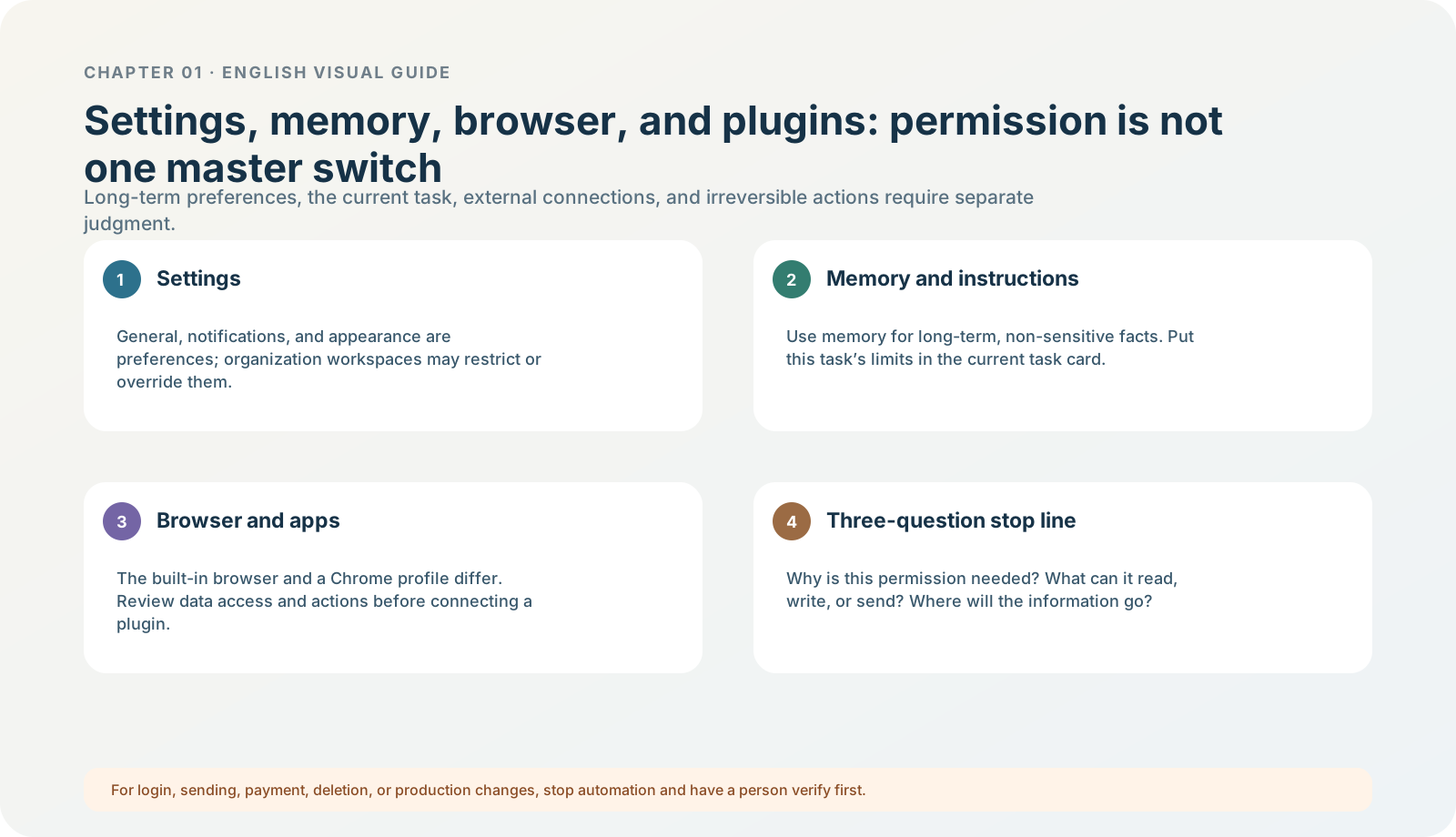
Figure 1-17 · DIA-01-V2-07. Long-term preferences and the current task boundary (teaching diagram, not a live-product screenshot).
This section answers: I want ChatGPT to “understand me” better over time. Which information may be saved, and which must be stated separately each time?
The three do not belong in the same drawer
| Mechanism | What it is suitable for | What it is not suitable for |
|---|---|---|
| Saved memories | Stable, non-sensitive preferences that affect collaboration over time. | Passwords, keys, proof of identity, client information, or temporary project facts. |
| Personalization | Long-term habits such as output language, tone, and expression format. | Operational boundaries such as “this task must be read-only and must not use the web.” |
| Custom instructions | Reusable ways of working, writing preferences, and reminder rules. | Sensitive or stale information that should not be retained long term. |
| Current task card | This task’s materials, prohibitions, acceptance, and authorization boundary. | It cannot be expected to permanently replace long-term preferences. |
Current official information: the new desktop app needs one more distinction: ChatGPT Work uses the ChatGPT memory of the account / workspace; the local Codex client uses separate local memories. In Codex, /memories determines whether the current chat uses or contributes to local memory, and Settings > Personalization manages the global switch. You cannot treat ChatGPT Work as the same local Codex-memory store. Memories and ChatGPT desktop app settings
Follow along: filter one piece of information by “stable and safe”
For every item you consider saving, ask four questions: will it stay true for at least several months? Does it contain no sensitive information? Does it not depend on one temporary task? If it is incorrectly cited in the future, can I correct or delete it easily? If all four answers are not “yes,” put it in the current task card or a local note first, not in memory.
Correct placement in the running case
“North Shore Reading Club may read only two fictional files and must not use the web” is the boundary of this exercise, and should not become long-term memory. “I prefer structured Chinese output, with facts and judgments separated” may be considered for personalization or custom instructions only if it is genuinely long-term stable and involves no sensitive information.
Minimum exercise and acceptance
Classify the following: I prefer Chinese tables, no web access for this task, and my API key is ….
Reference answer: a stable preference may be considered for personalization / custom instructions; “no web access for this task” belongs in the task card; an API key belongs in none of the three. Common pitfall: treating “memory” as a long-term private-material store, or writing a temporary operational limit as a permanent preference. Next: once browser, computer control, Chrome, or remote connection is involved, permission boundaries matter even more.