 YunLab.ai
 CHAPTER 04 · 4.15–4.20
Handbook version: v1.0 · Official material check: 2026-08-23 · The current interface and account availability depend on each reader’s own state.
Run human acceptance and record the decision
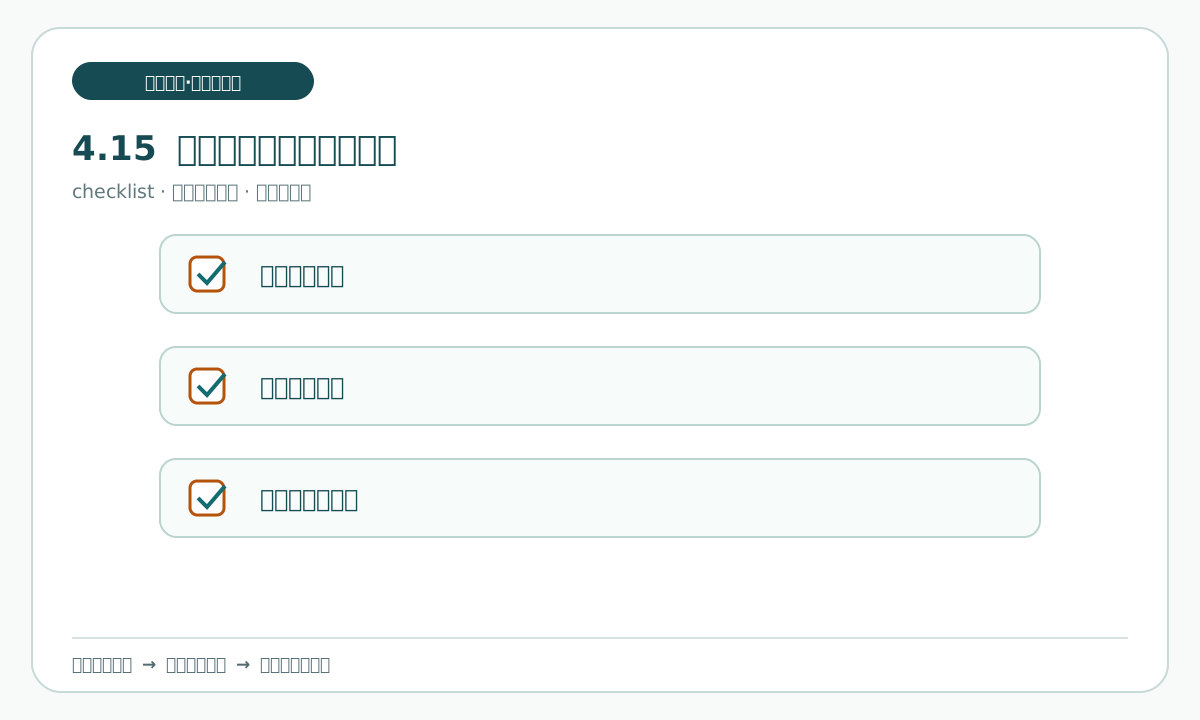
What this section answers
Which person uses which traceable materials to decide whether the candidate draft passes, returns for revision, or remains pending?
Why
Only a human can make the acceptance decision; neither the assistant's recommendation nor a draft replaces the gate.
Follow along
In acceptance-record.md, check the input, traceability, draft, unresolved items, and limits one by one. This gate only bridges the human delivery gates in Chapter 6 section 6.16 and Chapter 7 section 7.11; it does not invent a delivery result.
What you should see
You should see a human record with a decision status and reason, without any statement that something was sent, published, or completed as business work.
Minimum practice and acceptance
A human reviews read-only-input.md, fact-and-limit-traceability.md, and brief-draft.md item by item so that every decision is traceable; a decision without a basis remains pending.
Common questions
If “the model says it is complete” was treated as a pass, revoke that judgment and repeat the human item-by-item check.
Next section
When a human identifies a problem, track only the affected facts and paragraphs; do not redo unrelated work.
Correct only affected facts and paragraphs
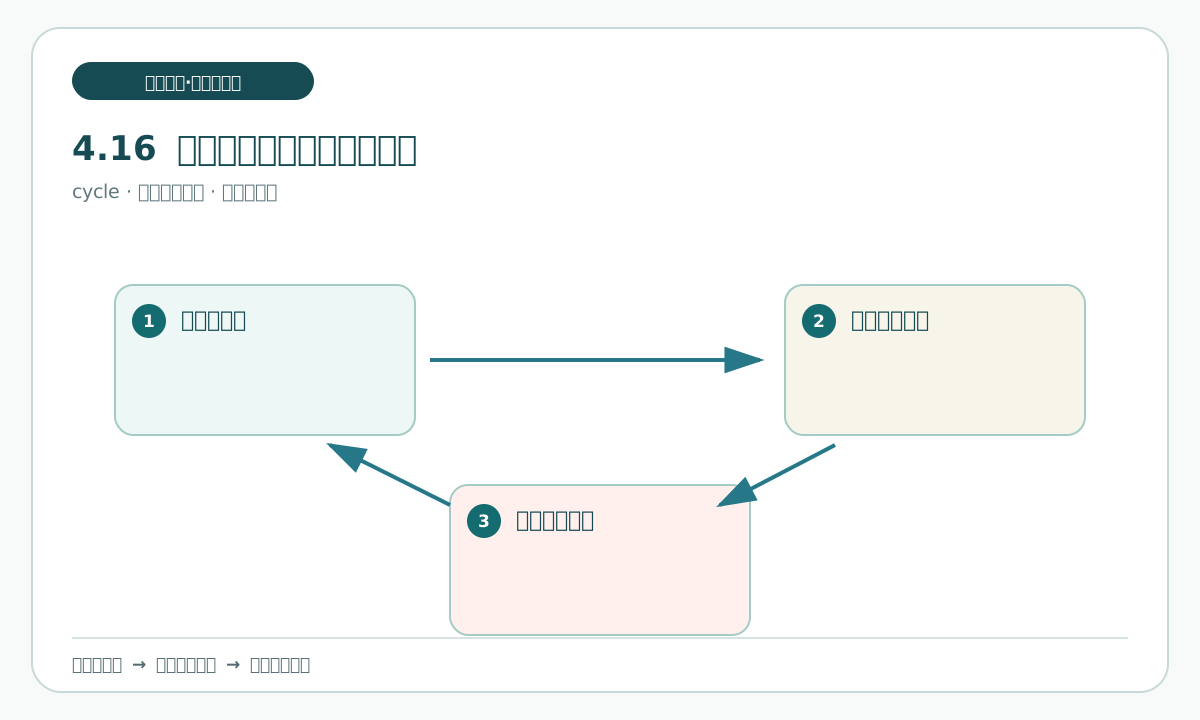
What this section answers
After a human returns one piece of content, how do you limit the repair while retaining the old version and impact relationship?
Why
Rewriting the whole document hides the original problem and can change correct records that were not affected.
Follow along
Use acceptance-record.md to locate the affected rows in fact-and-limit-traceability.md and paragraphs in brief-draft.md. Keep the old text and make the smallest change; this is the minimum-repair principle in Chapter 7 section 7.9.
What you should see
The repair record should say what changed, why it changed, and what did not change; the old version remains available for review.
Minimum practice and acceptance
A human confirms that the repair handles only the identified impact and that the new paragraph points back to the material and limits again.
Common questions
If unrelated paragraphs were adjusted while making a repair, undo those extra changes and narrow the impact again.
Next section
After all accepted repairs are complete, freeze the current comparable state as the W01 baseline.
Freeze the W01 read-only comparison baseline
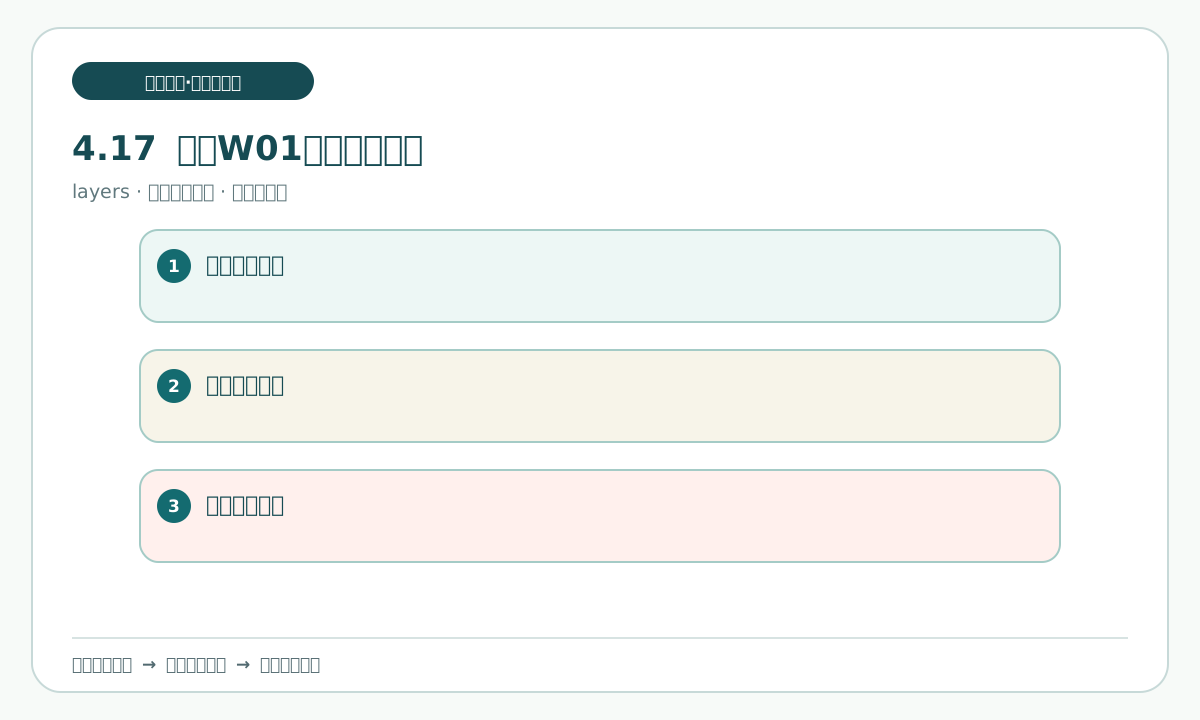
What this section answers
Which checked records make up the comparable, non-writable W01 freeze baseline?
Why
Freezing gives Chapter 5 a definite exercise starting point without allowing Chapter 5 actions to write back into Chapter 4.
Follow along
Summarize the status of input-snapshot.md, fact-and-limit-traceability.md, brief-draft.md, acceptance-record.md, and pending-decisions.md, then mark it as a read-only comparison baseline in handoff-note.md.
What you should see
The baseline contains status, limits, and unresolved questions, and explicitly records that there was no sending, publishing, or external action.
Minimum practice and acceptance
A human confirms that the frozen package can be located read-only by the next reader and that the three questions remain visible with it.
Common questions
If freeze is described as “all questions are solved”, restore the unresolved list and withdraw that description.
Next section
If the process is interrupted, recover from a location traceable before or after the freeze instead of guessing and filling text.
Recover and continue after an interruption
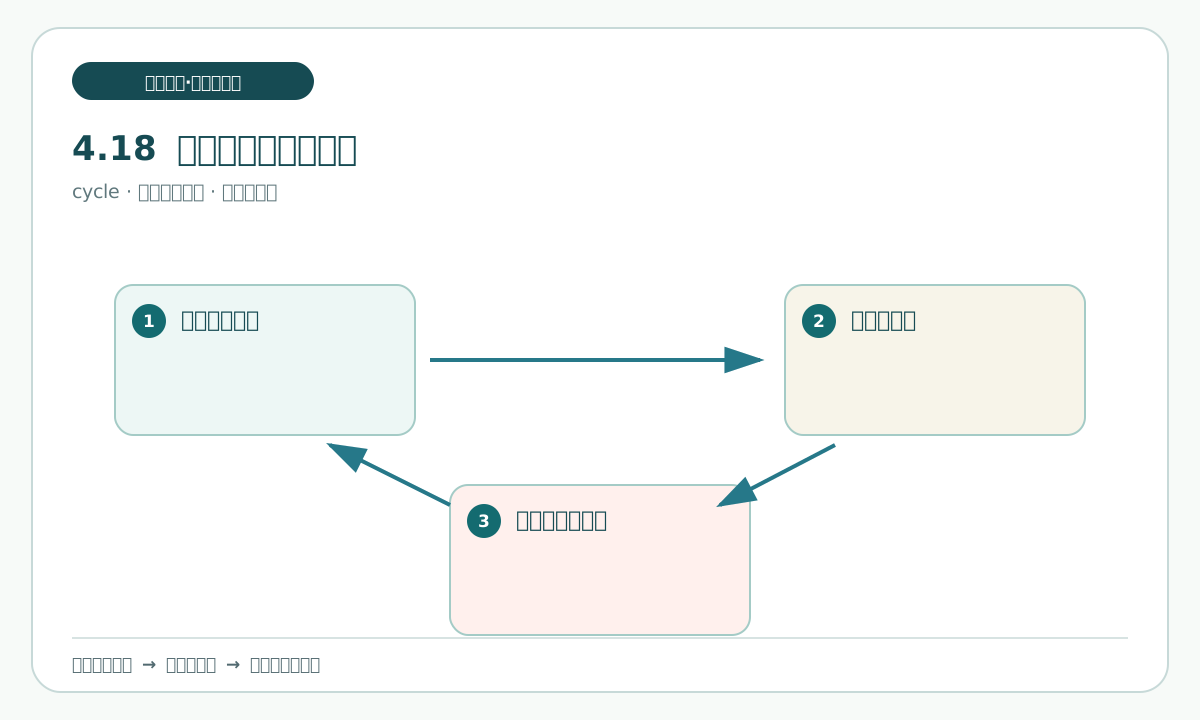
What this section answers
After an interruption, how do you recover a checkable location before deciding whether to continue W01?
Why
An unexplained interruption must not be replaced by memory, inference, or newly generated text.
Follow along
First check the copy of read-only-input.md, the last valid record in fact-and-limit-traceability.md or acceptance-record.md, and the status of pending-decisions.md. Then choose the smallest next action; this bridges the recovery principle in Chapter 7 section 7.12.
What you should see
A recovery path separates the known location, the unknown gap, and the next step that needs human confirmation.
Minimum practice and acceptance
A human confirms that the recovery point can be located in the materials. If it cannot, record the gap and remain stopped; continuous prose is not evidence.
Common questions
If someone continues directly from the last draft sentence, return to input-snapshot.md and the acceptance status. Do not continue by semantic fluency.
Next section
Once recovery is stable, assemble the delivery and handoff note for the next reader.
Assemble the chapter delivery and handoff note
What this section answers
Which W01 records must the next reader receive to judge the current status and the next safe action?
Why
A handoff does not announce “everything is complete”; it transfers the known items, unresolved items, limits, and locations together.
Follow along
Assemble a controlled directory containing input-snapshot.md, fact-and-limit-traceability.md, brief-draft.md, acceptance-record.md, the freeze note, pending-decisions.md, and handoff-note.md. The entry remains traceable from README.md.
What you should see
The candidate handoff package should state that it was not sent or published, support read-only comparison, and locate its limits.
Minimum practice and acceptance
A human checks that the next reader can find the baseline, three pending questions, limits, and recovery entry without guessing at gaps.
Common questions
If the delivery includes drafts but omits acceptance or unresolved items, stop assembling and restore the traceable locations.
Next section
Perform the final cross-chapter boundary check and confirm that Chapter 5 reads only the frozen baseline and does not inherit factual answers.
Final check: enter Chapter 5 with a comparable starting point
What this section answers
At the end of Chapter 4, which content may Chapter 5 cite read-only, and which must remain in Chapter 4 or await a human decision?
Why
Clear chapter boundaries prevent W01 fictional materials, unresolved questions, or candidate wording from being mistaken for public-research facts.
Follow along
Check that README.md is frozen, pending-decisions.md remains unresolved, and handoff-note.md states the read-only purpose. Limit the next step to routing the questions first. The three questions remain: who reviews the fact classification, which item goes through internal confirmation first, and whether public research preparation is allowed for a bounded question. Chapter 5 section 5.2 carries only the W01 frozen read-only baseline; it does not inherit W01's factual answers.
What you should see
The Chapter 3 method delivery, Chapter 4 frozen baseline, and Chapter 5 controlled research entry remain distinct. There must be no claim that the package went online, verified public facts, sent, or published anything.
Minimum practice and acceptance
A human confirms that the page's materials, status, limits, and three questions are traceable before handing the freeze note to Chapter 5; any gap stops in this chapter.
Common questions
If a Chapter 5 source, card, or conclusion is written into W01 early, stop immediately and restore the Chapter 4/5 separation.
Next section
This chapter ends here. When entering Chapter 5, read only the freeze note and first decide whether each pending question requires internal confirmation or bounded public research preparation.