 YunLab.ai
 CHAPTER 05 · 5.1–5.7
Handbook version: v1.0 · Official material check: 2026-08-23 · The current interface and account availability depend on each reader’s own state.
5.1 What this chapter solves: bring public research into the workflow without losing control
What this section solves
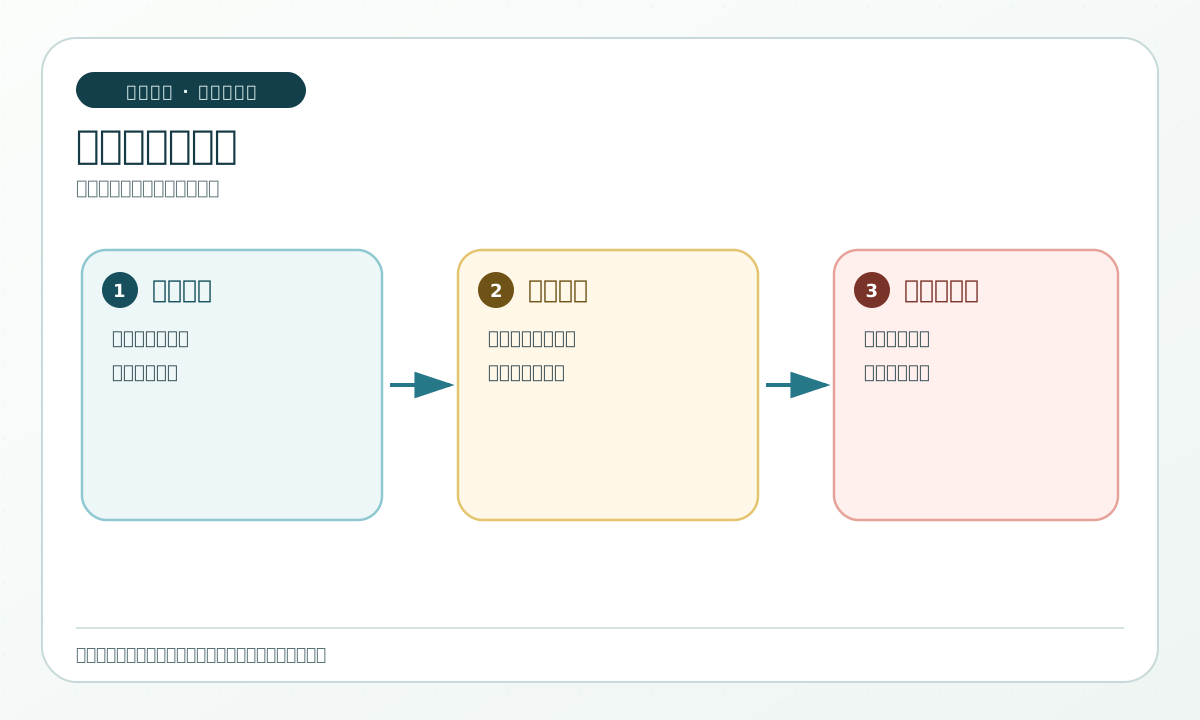
This chapter begins with a distinction that protects every later record: an internal confirmation is not the same task as public research. A question about an owner, a review decision, or the next handoff belongs to a human decision path. A bounded question about an already specified public fact may be researched only after its object, source boundary, and stop line are written down.
The aim is not to produce a polished answer in the first pass. The aim is to leave a traceable question, a limited material set, and an explicit reason to stop. If the material does not support a statement, the exercise records the gap instead of filling it with a plausible sentence.
What supports it
The offline exercise material is a method aid, not evidence of any real event. Read the fields for an object, a date range, a source boundary, and a stop condition. A useful record can be opened and checked by another reader; it cannot turn a template into a product log or a business decision.
For this chapter, a result is acceptable only when the reader can point back to an input location and explain the remaining limitation. The exercises use fictional cards and blank personal copies. They do not ask for a real name, account, private path, or external action.
Follow along
- Read the start-here instructions and note the practice purpose, allowed directory, and stop line.
- Write one sentence in your notes: “This pass checks four classes of activity information and does not handle real business.”
- Open
W01 pending decisions; do not copy an answer. - Open the three offline extract cards, confirm that each is readable, and record its file name without changing it.
- Open the four blank table originals, confirm that they are templates, and copy them only as your personal exercise copies.
- Write the exercise name and a personal practice number at the top of your T1 copy; leave facts blank.
If the work is described as a Codex exercise, keep the scope equally narrow: use the task brief, the four fictional inputs, and the personal copies only.
Copyable prompt 1:
Goal: Help me decide which questions this exercise should handle and which must be confirmed by a person.
Allowed to read:W01 pending decisions, three fictional offline extract cards, and the four personal blank-table copies I made.
Only output: Write a “question scope and stop line” draft only in the T1 personal copy I specify.
Prohibited actions: Do not use the network, open a web page, modify input cards, fill activity answers, create a new file, or turn an internal pending item into a public conclusion.
Acceptance: Every scope item returns to a file name; unsupported material stays pending; the output ends with the points a human must check.
Stop when: An input cannot open, material differs from expectation, real sensitive information appears, or Codex tries to use the network or write to an unauthorized location.
If the current client cannot read or write local files, complete the corresponding table manually; this prompt is task wording, not a UI or capability guarantee.
Use these inputs: W01 pending decisions, the three offline cards, and your T1 personal copy. Codex may help outline a question, a few fields, or a stop line. It may not decide the public-research boundary, change an input, or act outside the exercise.
What you should see
Your T1 copy should show one bounded practice scope rather than a page of pending answers. The four inputs are read-only; the personal copy is the only exercise writing surface. The scope sentence should name an object, a field, a material boundary, and a time boundary.
You should not see an account number, a real service, a client name, or a claim that an event has happened. A missing basis should be written as “stop and record the gap”, not “complete the answer”.
Practice and human acceptance
Practice: without opening a web page, use the four fictional inputs to write one T1 scope line, one explicit out-of-scope statement, and one allowed-read statement.
- A first-time reader can explain what this pass does.
- The allowed files and the only writable personal copy are named.
- No activity answer, real organization, account, or publishing action appears.
- The record says to stop when support is missing instead of promising to fill every field.
Human acceptance checks traceability and boundary language; it does not treat the exercise result as an external conclusion.
Common pitfalls, recovery, and stop points
Pitfall one: treating “public research” as permission to open any page. Return to the question scope, allowed material, and stop condition. If the next page is outside the written scope, stop and record why.
Pitfall two: treating a blank card as an instruction. Keep the source location and the missing field separate. If a sentence cannot be classified as source wording, judgment, or unknown, do not upgrade it.
Next
The next section carries only the Chapter 4 W01 read-only baseline into this chapter. It does not carry W01 factual answers.
5.2 Carry forward the Chapter 4 frozen state
What this section solves
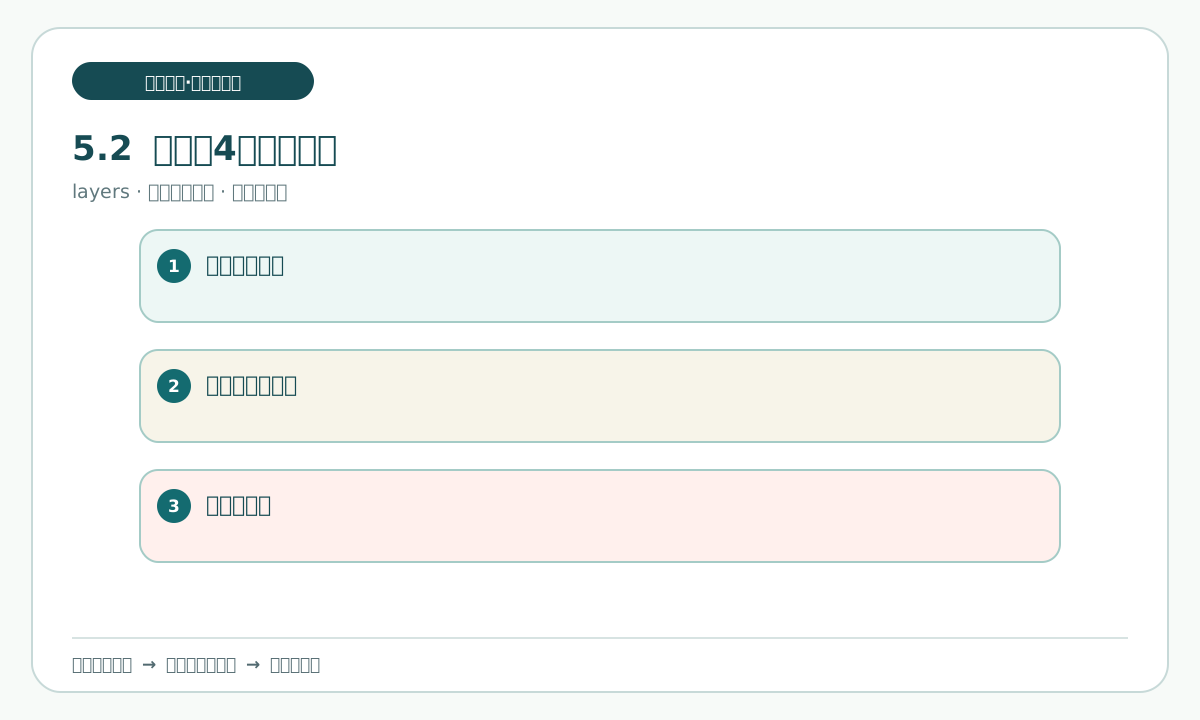
The handoff from Chapter 4 has one safe meaning: preserve the W01 baseline and its pending questions. It is not permission to turn a pending field into a confirmed fact. Chapter 5 begins a new research decision, so its questions, sources, and limits must be written again.
What supports it
The W01 record is read-only exercise input. Read its title, instructions, and three pending items, then record the input name in your T1 copy. The date in this local practice is a practice marker, not a product event log. Keep the personal copy separate from the original.
Follow along
- Open
W01 pending decisionsand read its title, exercise instructions, and three pending items. - Open the three extract cards; inspect file names and entries without marking an answer inside a card.
- In your T1 copy, fill the input-material field with the four file names.
- Record a local practice start time and practice number; this is not a product log.
- Open your blank T2, T3, and T4 copies and confirm that they remain blank.
- If W01 or a card already has a personal annotation, stop using that set, preserve the state, and start with a clean copy.
What you should see
T1 should name four inputs and three pending items without turning any one of them into an answer. The W01 file remains unchanged, and each later table is a separate personal copy.
Practice and human acceptance
Practice: have a second reader compare the file names in T1 with the four read-only inputs. Pass only when the baseline is identifiable, the pending items are still pending, and no personal note has been written into an input.
Common pitfalls, recovery, and stop points
Do not use the word “frozen” to mean “factually correct”. It means that this exercise preserves the input as a baseline. If an input is annotated or its identity is unclear, stop rather than repair it in place.
Next
With the baseline preserved, the next section decides which questions may be researched publicly and which require internal confirmation.
5.3 Which questions need public research, and which must stay offline
What this section solves
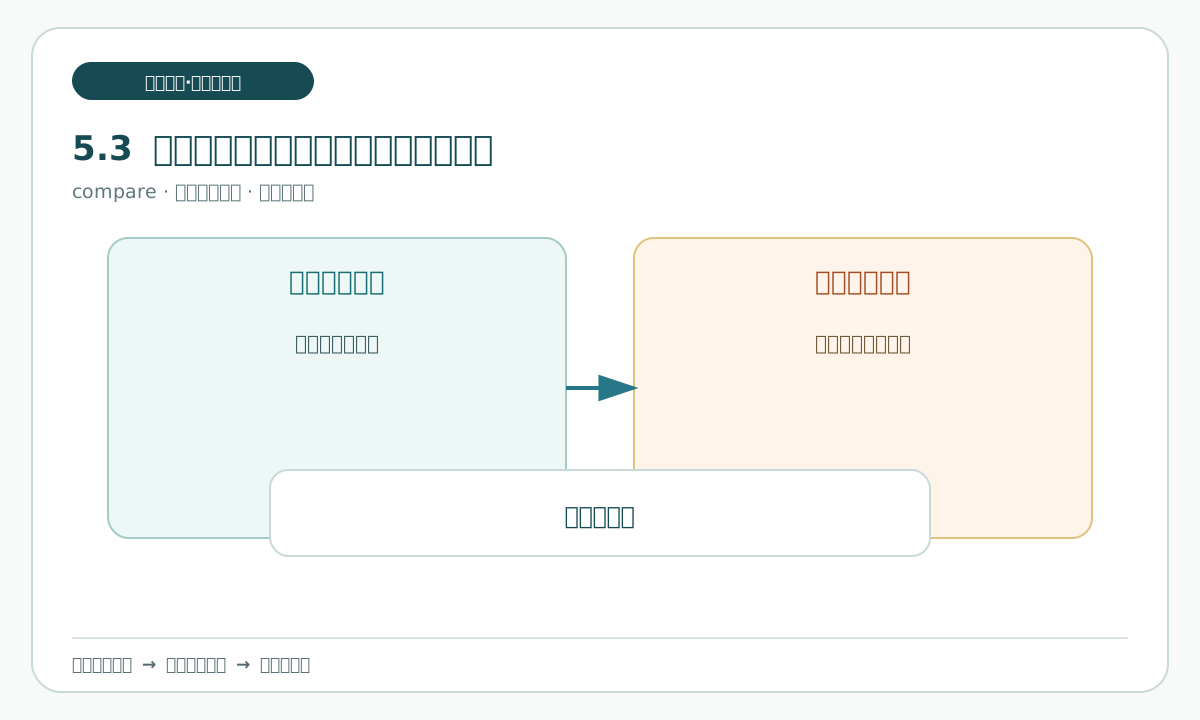
“Can this be researched?” is not a single yes-or-no question. First identify the object and field, then ask whether the field is an external public fact or an internal decision. A missing answer is acceptable when the reason and next human decision are visible.
What supports it
The basis is only the W01 wording and the method boundary in this handbook. An owner, reviewer, deadline, or inclusion decision normally needs an internal person. A bounded public fact can be checked against a named source range after the research question card has defined it. Neither path supplies an answer automatically.
Follow along
- Read-only open
W01 pending decisionsand copy the three item sentences into T1. - For each item, mark whether a bounded public check is appropriate; do not enter the activity's four answers.
- Write whether the reason is an internal decision, a public fact, or an unresolved classification.
- In “internal confirmation object”, write a role such as record owner or reviewer, or leave it for a person to assign; do not enter a real name.
- In “next safe action”, write “confirm internally”, “retain pending”, or “research within the approved scope”.
- Check T1 and confirm that none of the three classifications has been copied into T2, T3, or T4.
Copyable prompt 2:
Goal: Classify the three pending items as “confirm internally first” or “eligible for low-risk public-research preparation”, and state the reason.
Allowed to read:W01 pending decisionsand the pending-judgment table in my T1 personal copy.
Only output: Modify only the judgment table in the T1 personal copy; do not fill an activity date, deadline, quota, or recording field.
Prohibited actions: Do not use the network, open a web page, use a real name or real business material, or turn an unsupported item into a definite answer.
Acceptance: Each item has one reason, an internal-confirmation object, and a next safe action; uncertainty remains pending.
Stop when: A real name or client detail appears, Codex recommends going online, an internal permission is needed without a confirmation object, or the table is written into an input file.
The same pending record remains the boundary reference: W01 pending decisions is input, not an answer.
Use the W01 file and the T1 judgment table. The output is a classification with a reason, a human role, and a next safe action. It is not a research result.
What you should see
Each of the three T1 rows should answer: why it was classified, who must decide, and what happens next. You should not see an event date or registration deadline here; those fields wait until the research question card is defined.
Practice and human acceptance
Have a human reader inspect the three rows. Pass when the reader can repeat the boundary without seeing an answer, and fail when a role has been invented, a private item has been opened, or a pending item has been marked complete.
Common pitfalls, recovery, and stop points
Do not equate “public” with “safe to collect”. If a field contains private or account-specific information, keep it offline. When the classification itself is unclear, preserve the uncertainty and ask for internal confirmation.
Next
After classification, write each allowed research need as a question with a purpose and a human acceptance condition.
5.4 Turn a research need into a question, purpose, and acceptance condition
What this section solves
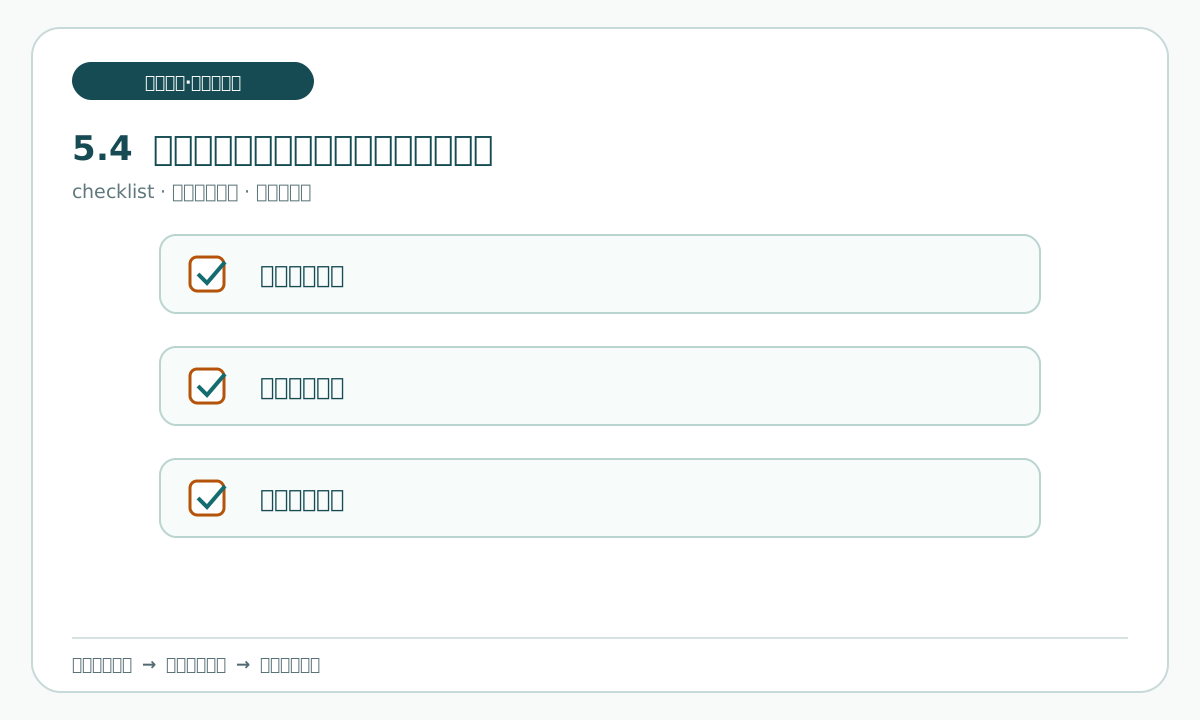
A keyword is not a research question. The research question card should state what object is being checked, which field matters, who will use the record, and what “enough” means. It must not silently add a real location, a registration action, or an answer to the four activity questions.
What supports it
Use the T1 classification, the four fictional inputs, and the question-card fields. A good question can be answered by one atomic claim later, while the purpose tells the human why the record matters. The acceptance condition must mention a source, a location, retained limits, and human review.
Follow along
- Open the “specific research question” field in your T1 copy and link it to the
research question card. - Split the four activity-information needs into four separate questions; do not add registration steps or a real place.
- Write who will use the record and which later decision it supports.
- Write acceptance actions that can be checked by opening a file: source present, location given, limitation retained, and human check recorded.
- Set the research scope to the four offline materials and set the time range to their simulated date range.
- Have a human read T1 sentence by sentence and check that one line can answer one question.
What you should see
T1 should contain four questions, four purposes, a material boundary, a simulated time range, and a privacy stop line. It should not contain a final fact or an unbounded instruction to keep searching.
Practice and human acceptance
Practice: fill the question, purpose, acceptance, material, time, and privacy fields in T1 while leaving every answer field blank. Ask a partner to repeat the four questions from the T1 copy.
Use the research question card as the blank structure and keep a second reference to the same research question card only for the human acceptance check.
Common pitfalls, recovery, and stop points
Pitfall: treating “public course”, “registration”, or “recording” as a complete question. Add an object, a field, and a purpose. If the question still cannot be bounded, stop.
Next
With the question bounded, the next section separates facts, inferences, opinions, recommendations, and unknowns.
5.5 Separate facts, inferences, opinions, recommendations, and unknowns
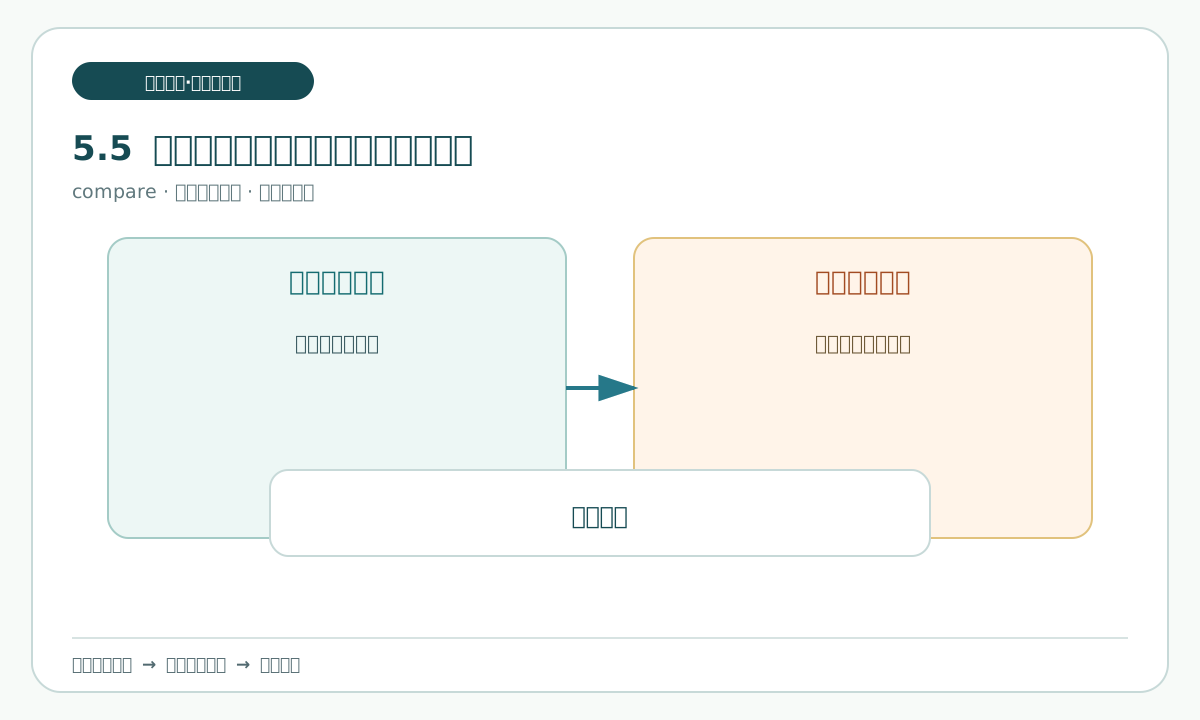
What this section solves
A source sentence, a relationship inferred from several cards, and a suggestion for the next step are different kinds of records. Mixing them makes a later reader believe that a teaching judgment came directly from a source.
What supports it
The atomic claims table is introduced here as a one-matter-per-sentence record. “The date is stated and a recording exists” contains two claims and must be split. An atomic claim is not merely a shorter sentence; it is one independent checking task.
- “The material directly states one activity field” is source wording.
- “The three cards need to be compared” is a handbook judgment.
Follow along
- Read the two examples and compare source wording with handbook judgment.
- Say how a sentence copied directly from a card should be labeled.
- Explain why a relationship inferred from several cards cannot be presented as one card's wording.
- Do not fill the T3 personal copy yet; formal recording begins in section 5.12.
- Ask a human to check that information type and final fact judgment remain separate.
What you should see
Each practice line has a type label and one checkable matter. A missing basis is marked unknown, and a recommendation is visibly a recommendation rather than a fact.
Practice and human acceptance
Choose three example sentences and label them source wording, inference, opinion, recommendation, or unknown. Pass when a human can explain the label without relying on a hidden assumption.
Keep the atomic claims table closed until the formal T3 step.
Common pitfalls, recovery, and stop points
Do not shorten a compound sentence by deleting its limitation. Split it into atomic claims and keep the original location. If no source supports the sentence, leave it unknown.
Next
Once information types are visible, establish a source priority without mistaking source count for evidence strength.
5.6 Establish source priority
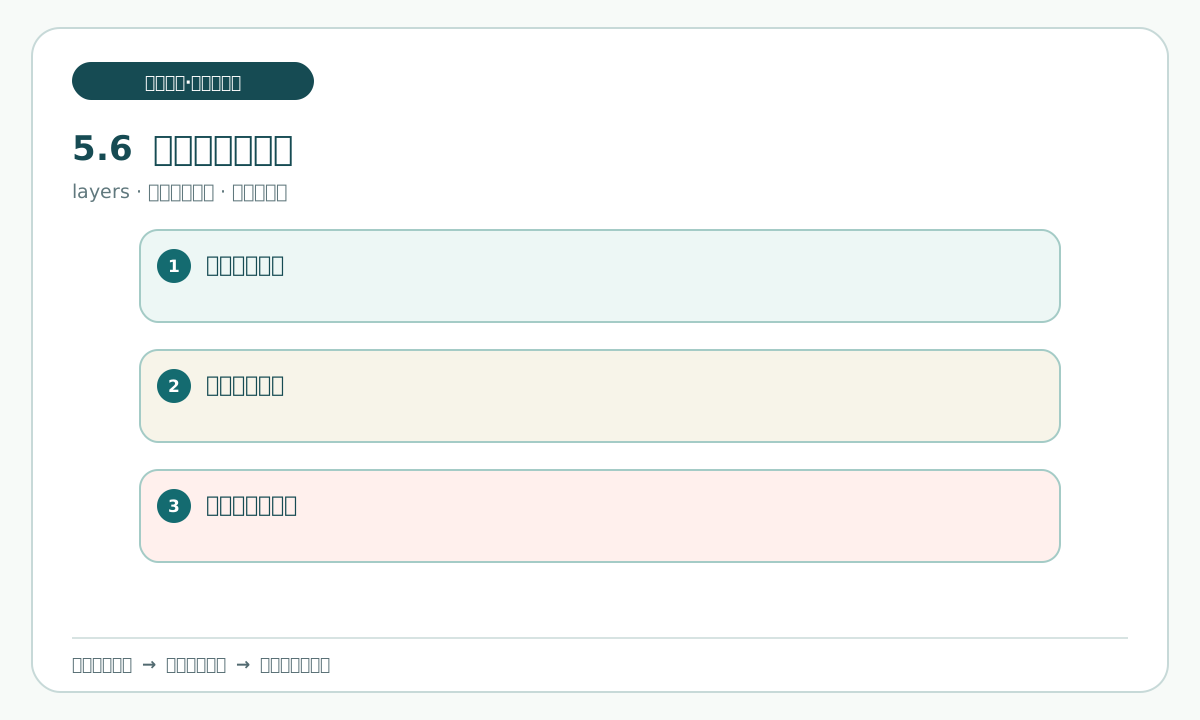
What this section solves
Three sources can repeat one another and still fail to provide independent support. Priority is a reasoned order for checking, not a license to erase a lower-priority record. The practice uses cards A, B, and C to distinguish an original notice, a repost, and a later correction.
What supports it
Look at who published a card, how it relates to the other cards, which field it covers, and which date or condition applies. A title alone does not establish authority. Record the reason and keep a source location in the source ledger.
Follow along
- Read cards A, B, and C without opening or filling T2.
- Classify each card as closer to an original notice, a repost or summary, or a later correction.
- Write one reason for each classification using publisher, title, and entry relationship only.
- Keep the three judgments in your notes; do not fill file name, date, location, or support-boundary fields in T2.
- Record relationships that still require a human judgment; the ledger begins in section 5.10.
- Check that each reason returns to a card and is not written as a final fact.
Copyable prompt 3:
Goal: Compare only the source relationships of the three offline extract cards and list the reason for each judgment about A, B, and C.
Allowed to read:card A,card B, andcard C; do not fill T2 in this section.
Only output: In the current task reply, list the A, B, and C source relationships and reasons; do not write to T2 or another file.
Prohibited actions: Do not use the network, add a source, call a card a real webpage, or write a judgment as a final fact.
Acceptance: Each relationship has a reason that returns to a card; T2 remains for section 5.10; the input cards are unchanged.
Stop when: File names do not match, an entry cannot be located, a real webpage or new source appears, or Codex suggests replacing the cards with search results.
The ledger is a traceability aid, not a second copy of the input. Link only the minimum metadata needed to find a statement and state what it does not support.
What you should see
You should have three source-type judgments with short reasons, while the cards remain unchanged. A lower-priority source can still matter when it contains a correction or a different scope.
Practice and human acceptance
Pass when a human can open each card and find the wording that supports its classification. Fail when the practice copies a whole card, hides a disagreement, or turns a priority judgment into an asserted fact.
Common pitfalls, recovery, and stop points
Pitfall: copying the entire card into the source ledger. Keep metadata and a location instead. If the personal ledger has absorbed an answer or a full input, restart from a blank personal copy.
The same source ledger remains the review target when the copy must be restarted.
Next
With three source rows, the next section can set the research object, time window, quantity limit, privacy line, and stop line.
5.7 Set scope, time, quantity, privacy, and the stop line
What this section solves
A research plan becomes safe only when its limits are as explicit as its question. This practice sets an object, fields, simulated dates, a number of inputs, a privacy boundary, and conditions that end the pass. The limits apply before a page, account, or download is considered.
What supports it
Use T1, the four fictional input files, and the source relationships from the earlier sections. The quantity limit is four offline inputs in this exercise. A future approved research task would need its own authorization; this section does not grant one.
Follow along
- In T1, write the activity object and the four fields to be checked.
- Set the time range to the simulated dates in the practice materials, not to real-world dates.
- Set the quantity limit to four read-only inputs; any future approved research must set its own page limit.
- Write the privacy line: no names, avatars, accounts, quotas, devices, sessions, private paths, or real files.
- Write the stop line: missing support, a login prompt, a download request, a new source, or an out-of-scope result ends the pass.
- Have a human check that every allowed action has a matching prohibition and that the two do not conflict.
What you should see
The scope card should fit on one reviewable record: object, field, material set, time window, quantity ceiling, privacy line, and stop conditions. It should not include a real account, a hidden source, or an instruction to continue indefinitely.
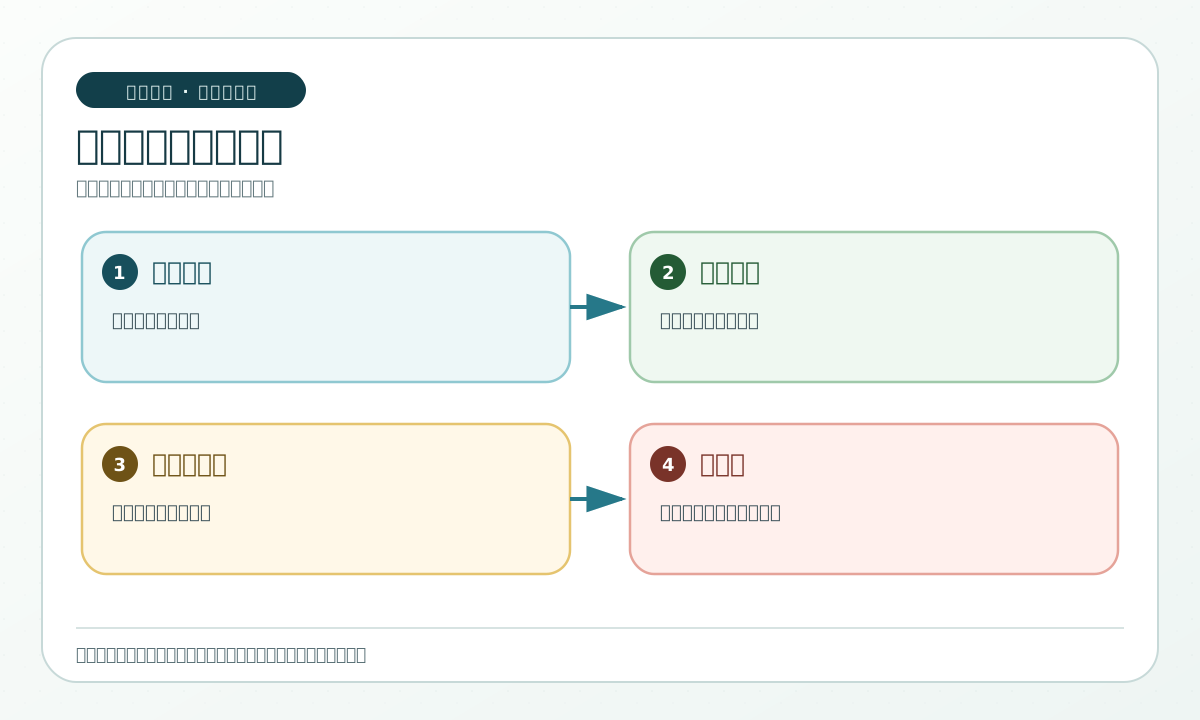
Practice and human acceptance
Practice: read T1 aloud. Pass when another reader can say what is allowed, what is forbidden, how many inputs are in scope, and when to stop without asking for a hidden assumption.
Common pitfalls, recovery, and stop points
Do not write “search until complete”. Replace it with a bounded source, quantity, or time limit. If a login, private file, or new source appears, stop, record the trigger, and do not widen the scope in place.
Next
The next unit turns the bounded questions into a keyword and source sequence. The boundary card remains the authority for when that sequence stops.